
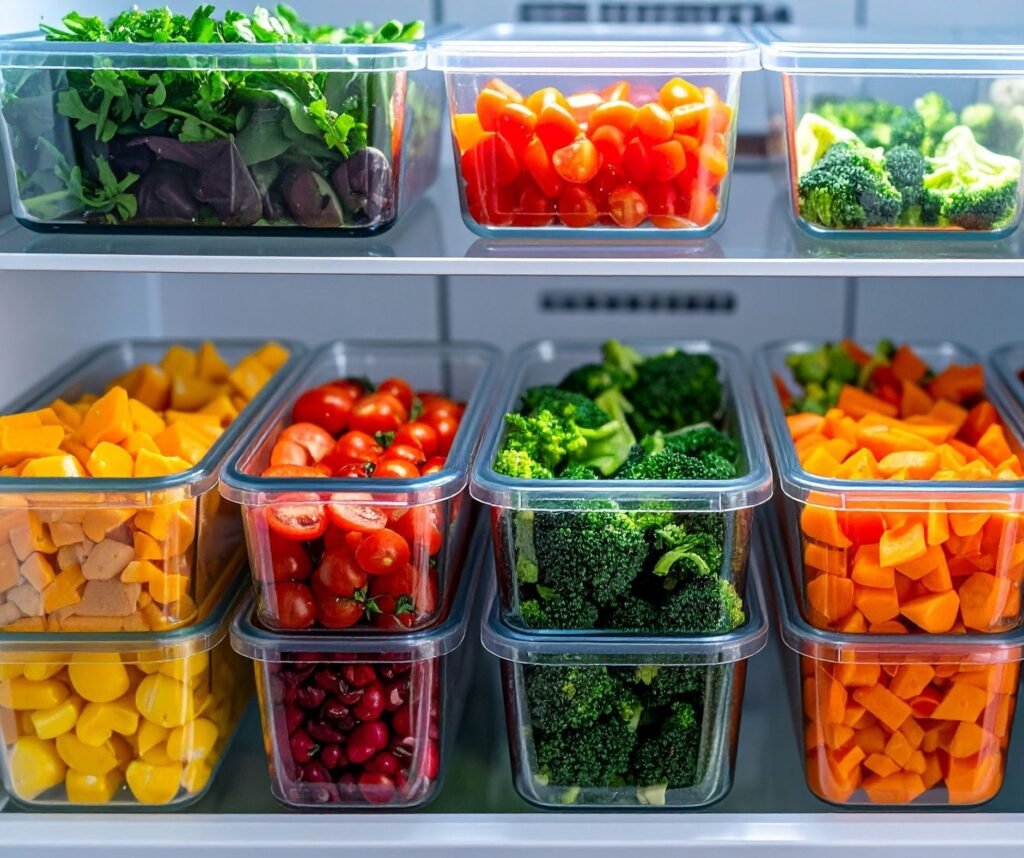
Is your restaurant inventory management system helping you stop waste and catch theft? Are your weekly routines built to protect profit every single week?
After thousands of kitchen assessments, we see the same thing every time: restaurants don’t lose profit from one big mistake. They lose it through tiny daily leaks — for example, a scoop that’s a little heavy, a prep batch that’s a little too big, an invoice that slips through with a close enough price, a case that gets opened and disappears, or a walk-in shelf that slowly turns into a compost pile.
RevenueHawk Insight: In our internal audits, the failing kitchens didn’t have worse recipes — they just had worse daily habits. And the biggest gap wasn’t talent. It was a lack of discipline: operators who treated inventory like a daily heartbeat routinely ran 3–6 percentage points lower food cost.
Want the big picture on where the restaurant industry is headed—what’s changing and what to expect? Check the National Restaurant Association’s 2026 outlook for an industry overview and trend snapshot.
If you’re serious about squeezing waste out of the system this year, you’ll want the mindset behind the RevenueHawk food cost optimization guide — because the winners aren’t counting more. They’re closing leaks every day.

KEY POINTS: WHAT YOU’LL LEARN
- The five daily inventory habits: What we put in place to stop hidden losses and keep margins steady.
- Why this matters: What’s changing in 2025–2026 that makes sloppy inventory fatal.
- Case Study: A real turnaround structure you can copy.
- What to Avoid: Five mistakes that explain why inventory doesn’t fix food cost.
- Metrics: The few formulas that actually control profit.
- Make it last: How to lock habits into shifts so it doesn’t depend on one good manager.
- The reset you need: Beliefs high-profit operators hold.
- What to Do Next: A 30-day rollout that doesn’t overwhelm the team.
WHY THIS MATTERS
Food inflation may have cooled compared to the chaos years, but it’s still not back to normal. USDA’s ERS shows food prices in January 2026 were 2.9% higher than in January 2025, and the cost picture is still jumpy.
Meanwhile, menu pricing is a tightrope. Customers notice every nickel, and simply raising prices isn’t a strategy — it’s a coin flip. Even industry coverage — a Restaurant Business report—has warned that expectations for menu inflation may be creeping up again, driven by cost pressure and policy shocks.
Big brands learned this lesson years ago. The best operators don’t fight food cost once a month. They build systems that make food cost hard to mess up, including:
- Tight portion standards.
- Simple prep flows.
- Clear pars.
- Relentless variance checks.
That’s why the real question behind hidden profit killers (“Why Is My Food Cost So High? 7 Hidden Profit Killers”) usually isn’t, what’s the food cost? It’s: what daily behavior is creating that food cost?
Unfortunately, the macro picture says you don’t get to relax. According to a Nation’s Restaurant News (NRN) report, cost pressure remains a dominant theme going into 2026.
Bottom line: your margin is getting attacked from the outside. If you don’t build daily control on the inside, you bleed.
THE 5 DAILY INVENTORY HABITS: HOW TO STOP HIDDEN LOSSES AND KEEP MARGINS
To turn inventory from a painful chore into a profit engine, we run a five-habit loop every day: (Habit 1) set critical item pars that match sales, (Habit 2) pull prep from a single source of truth, (Habit 3) lock portions before service starts, (Habit 4) log waste in real time with a reason code, and (Habit 5) reconcile usage daily so variance can’t hide for a week.
How to stop guess par ordering?
Start with critical items, not everything. Pick 12–20 items that drive most of your spend and most of your variance (proteins, cheese, fry oil, high-value produce, top liquor/beer, high-waste prep items). Set pars based on the last 14 days of usage, not vibes.
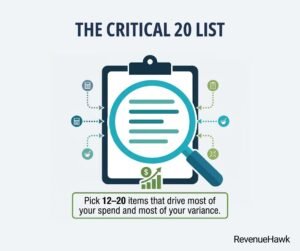
What we see all the time: kitchens that count everything weekly often miss the point. They drown in data and still run out of chicken on Friday. The winners keep a small list that gets checked daily.
How to make prep match sales, not hope?
Most food cost spikes start in prep. You over-prep, then you feature it, then you comp it, then it dies in the walk-in. Here’s the fix: one pull sheet. One forecast. One owner.
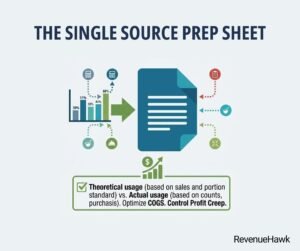
This habit is where batch prep systems become a must-have margin tool, not a trendy term: batch sizes should be tied to forecasted covers and the item’s real shelf life. If it can’t survive two days, it doesn’t get a three-day batch.
How to make recipe costs real (not fantasy)?
If your recipe costing is using the vendor’s old spec sheet, your numbers are fake. Period.
You need:
- Current invoice prices (not last quarter’s).
- Yield loss (trim, cook loss, spill).
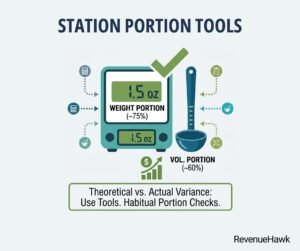
- Portion size measured with a tool, not a memory.
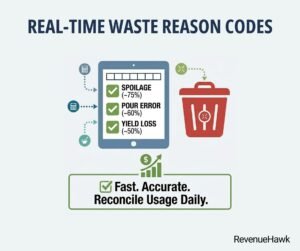
Throughout our experience, we’ve seen that waste logs fail because they turn into a shame board. People just stop writing.
Try to do it differently:
- Keep it small (top 10 waste items only).
- Log fast (checkbox, grams/ounces and reason).
- Review daily for 5 minutes, no yelling.
How to reconcile inventory without expensive tools?
Do you need need fancy software to build control? No, you don’t — you need rhythm.
Do this daily: reconcile your critical items. Do this weekly: reconcile full inventory.
That’s the backbone of our guide on how to track weekly food cost — with or without software — because weekly cost without daily variance control is like weighing yourself once a month and wondering why your jeans don’t fit.
To make the variance visible, track one simple number daily on critical items:
- Theoretical usage (based on sales and portion standard)
- Actual usage (based on counts, purchases)
Remember, the gap is where your profit goes to die.
CASE STUDY: INDEPENDENT PIZZA AND WINGS PLACE
Restaurant Type
Independent pizza and wings
Location
Midwest U.S. (suburban trade area)
Seats
48 (plus heavy takeout)
Problem Identified
Food cost looked fine monthly, but cash was tight. Weekly swings were brutal, and wing cost spikes weren’t caught until it was too late.
What Was Implemented
Daily critical-item reconciliation (cheese, wings, pepperoni, dough, fry oil), portion tools at every station, new prep pars, invoice price checks twice a week, and vendor renegotiation.
Results
Food cost stabilized within three weeks. Variance on cheese dropped sharply. Wing margin recovered even during price volatility. Manager time on inventory day dropped because daily habits removed the panic.
Two specific moves made the difference:
- They stopped reacting and adopted fixing food cost spikes as a process: when wings jumped, they didn’t wait for the month-end report. They adjusted portions, tightened waste logging, and ran a 72-hour price and menu mix check.
- They used supplier negotiation tactics to protect margin: they didn’t beg for a discount. They consolidated volume, tightened specs, and made substitutions that didn’t change the guest experience (but did change unit economics).
Want the bigger picture on tariffs and cost spikes? Check Restaurant Dive’s article for a broader look at how tariffs and rising costs have been rippling through restaurant operations.
MISTAKES: WHAT TO AVOID
- Weekly inventory doesn’t fix daily theft. It just tells you you were robbed.
- If your team “knows portions,” you’re already losing money. Install tools.
- If prep doesn’t match sales, your walk-in becomes a landfill.
- If invoice prices aren’t checked, vendors set your food cost for you.
- If variance isn’t reviewed daily, the problem hides until it’s too expensive.
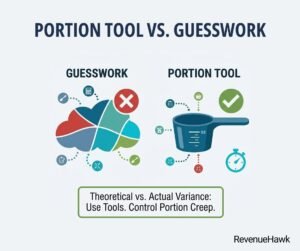
This is why installing stop-over-portioning systems matters so much. Over-portioning isn’t simply a training issue — it’s a core design issue. If the line is allowed to over-serve, it will — especially when it’s busy.
And don’t ignore loss prevention for shrink, waste, theft and “oops moments”. They all show up the same way in your P&L: missing product. High-profit kitchens don’t moralize it — they design it out.
METRICS: THE NUMBERS THAT MATTER
If you track everything, you’ll control nothing. Track these:
Food Cost %
Food Cost % = COGS / Food Sales
Theoretical Food Cost %
Theoretical Food Cost % = (Portion Cost × Units Sold) / Food Sales
Variance (points)
Variance (points) = Actual % − Ideal %
Prime Cost %
Prime Cost % = (COGS + Labor) / Total Sales
Contribution Margin (per dish)
Contribution Margin (per dish) = Price − Cost
Pricing connects here. If you want a target framework, the 28% food cost pricing formula is simple: set pricing so your best sellers land near target after real yields and real portions — not spreadsheet dreams.
Also, don’t forget drinks. Most restaurants are sitting on margin they don’t measure. Beverage cost percentage is the hidden lever, because small changes in pour discipline can out-earn an entire menu redesign.
You can check this FRED series to track food away from home inflation at the macro level. It’s helpful for budgeting and making pricing decisions.
HOW TO MAKE IT LAST
Here’s the checklist we use to make daily habits permanent:
- Pars posted where ordering happens (not buried in a binder).
- Portion tools attached to stations.
- Waste log takes under 60 seconds per entry.
- Daily critical counts assigned to specific roles.
- Variance review happens at the same time daily (5 minutes).
Then you add one more hard move: remove low-margin menu items. This isn’t cruel — it’s just numbers. These items cause problems: they add more ingredients to track, make prep harder, and lead to more food going bad.
Want to learn why the search for value makes waste even more dangerous right now? Here’s a McKinsey piece with an outside view on how consumer behavior is shifting heading into 2026.
THE RESET YOU NEED
What we’ve learned is that high-profit operators don’t just think about inventory. They obsess over the pressure in the system that creates inventory problems.
Here are the two beliefs that change everything:
- Menus create inventory behavior: That’s why recipe engineering for profit is important. It makes the kitchen easier to run: fewer odd ingredients, more ingredients used across many dishes, better portions, easier training, and less food thrown away.
- Design beats willpower: If your margins require perfect people, they aren’t real. If you want your menu to help you, learn menu engineering basics and build a menu that naturally pushes guests toward items your kitchen can execute consistently.
Want a data-first read on sales and traffic? Check Black Box Intelligence’s January 2026 review.
ACTION PLAN: WHAT TO DO NEXT
If you want this to work without burning out your team, run the next 30 days like this: (Week 1) choose critical items and set pars. (Week 2) lock portions and update recipe costs. (Week 3) install a waste and variance review rhythm. (Week 4) simplify the menu and adjust prices carefully.
How to set up critical items fast?
Pick the 12–20 items that:
- Are expensive
- Move fast
- Spoil easily
- Get portioned by hand
Count them daily. That’s it. Don’t overcomplicate.
How to portion control without drama?
Make it easy to do the right thing:
- Scales where plating happens
- Scoops labeled
- Ladles sized
- Pour spouts standardized
Update recipe costs with current invoices. Don’t average it out.
How to make variance visible?
Do a 5-minute daily huddle:
- What spiked?
- Why?
- What changes today?
No speeches are needed. Just action.
How to raise prices without losing guests?
Don’t raise prices across the board. That’s not a good plan, and it can cause problems.
Learn the raise prices without losing guests logic: adjust prices where demand is least sensitive, protect your value anchors, and pair price moves with visible value (portion consistency, speed, better bundles, a tighter experience).
FREQUENTLY ASKED QUESTIONS (FAQ)
1) Do I need inventory software for this to work?
Skip the software for now. Build the habit first. Track it on a clipboard. When you’re consistent, then earn the dashboard.
2) How many items should we count daily?
Start with 12–20 critical items. Expand only after the rhythm sticks.
3) My food cost is high, but my team swears portions are right — what now?
Don’t guess. Measure everything. Over-portioning is usually invisible until you force reality with tools.
4) How fast should I see results?
Daily variance control often shows signal within 7–14 days. Full stabilization usually takes 30–45 days because purchasing and prep cycles have lag.
FINAL THOUGHTS
Most restaurants don’t close because the food is bad. They close because they lose money every day.
Remember, inventory isn’t a back-office job. It’s a daily habit. And the five habits above are the difference between being busy but broke and being busy and getting paid.
This is just part of our Restaurant Growth Engine. The big idea is simple: stop chasing one big answer. Build a system that makes profit every day.