
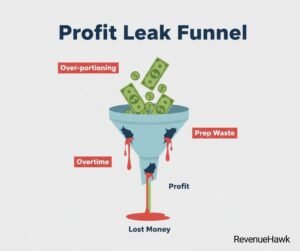
What if I told you one of the biggest leaks — maybe the biggest — in your P&L isn’t the dining room… it’s the prep table?
When we audit restaurants at RevenueHawk, the struggling ones all look the same in the back: prep never ends. It’s just constant mini-emergencies. Then you get overtime, close enough portions, and ingredients turning into trash in the walk-in. Top performers don’t run like that. They batch prep on purpose — only what matters, when it matters — with guardrails that keep everyone honest. That’s the whole game.
And if you want the one thing to anchor this year, start with our food-cost optimization guide. (Yes — this one belongs up front. It’s the solid base.)
RevenueHawk Insight: We analyzed weekly prep logs across hundreds of restaurants (fast casual and casual dining). The top quartile didn’t just work harder. They ran two tight batch windows per day, and they averaged 14–18% lower BOH labor hours and 11–16% less prep-related waste versus everyone else.

KEY POINTS: WHAT YOU’LL LEARN
- Step-by-step: How to build a batch-prep machine that cuts chaos, not corners.
- Why this matters: Where the squeeze is coming from and why staffing harder fails.
- Case Study: A leading brand showing how systems create labor and COGS wins.
- What to avoid: Key batch prep system mistakes operators make.
- Metrics: The few numbers that actually predict margin.
- Make It last: Simple routines that keep your gains from sliding back.
- The reset you need: Beliefs that change decisions (and results).
- What to Do Next: A 30-day rollout that doesn’t overwhelm your team.
WHY THIS MATTERS
We see operators all the time trying to fix food cost and labor cost separately. That’s usually a mistake. Food cost and labor cost are linked, and prep is the bridge between them.
In today’s economic environment, costs are still putting pressure on the business:
- The Price Ceiling: According to BLS CPI menu prices (food-away-from-home) were up 4.1% over the last year (Dec 2025). While you’re charging more, consumers are hitting a limit. If you aren’t tightening your internal systems, you can’t just “price” your way out of trouble anymore.
- The Wholesale Floor: The National Restaurant Association notes that wholesale food prices remain well above pre-pandemic levels—specifically, the PPI for all foods stood 34% above Feb 2020 levels as of Dec 2025.
- The Labor Weight: National Restaurant Association reports that labor costs remain “outsized” versus historical norms.
The market is massive — but the leaks are more expensive than ever. And, big brands aren’t winning by magic; they are winning by making operational choices that protect margin. For example Restaurant Dive reported that Sweetgreen’s automation-heavy Infinite Kitchen locations delivered ca. 700 bps in labor savings and ca. 100 bps in COGS improvement compared to their classic format.
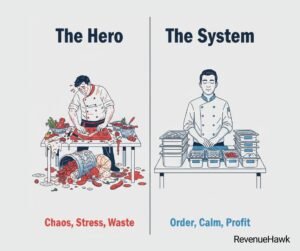
Heroes are expensive. Systems are repeatable. That’s the power of System over Hero.
If you’re asking, “Why are my costs doing this?”—you aren’t dealing with a single problem. You’re dealing with hidden profit leaks that occur in the gap between the invoice and the plate.
Batch prep is one of the fastest ways to plug them because it touches everything: purchasing, yields, portions, speed, waste, and labor planning. As McKinsey’s 2026 consumer piece points out, since restaurant costs are rising faster than grocery costs, your execution is the only thing standing between a loyal guest and a home-cooked meal.
STEP-BY-STEP: HOW TO BUILD BATCH PREP SYSTEMS THAT ACTUALLY WORK
To slash labor and waste without turning your kitchen into a science project, we run a 5-step batch-prep audit: (Step 1) cost the truth, (Step 2) set batch targets, (Step 3) lock portion control, (Step 4) buy like a pro, and (Step 5) protect the line with weekly controls.
How to Cost the Truth So Prep Decisions Stop Being Guesses?
If you don’t know what a batch costs, you can’t control it.
Start with recipe-costing accuracy. That means:
- Every ingredient at current unit cost (not last year’s invoice).
- Real yields (trim, cook loss, spillage).
- Real portion size (what actually leaves the kitchen, not what the spec says).
This is where we see most restaurants lie to themselves. They’ll spend hours chasing pennies on labor… while serving a portion that’s 20% larger than intended.
RevenueHawk pattern: when we hear a restaurant say that food cost is random, 7 out of 10 times their recipes are either missing yield loss or portions are drifting.
How to Set Batch Targets in Order to Prep the Right Amount?
This is where you turn batch prep into a system.
You need a simple weekly rhythm for forecasting and adjustment. That’s weekly food-cost tracking. You don’t need fancy tech. All you need is consistency:
- Lock a weekly count time (same day, same hour).
- Track key items (your top 20 cost drivers), not every sesame seed.
- Compare “ideal” vs “actual” by category: proteins, produce, dairy, dry, beverage.
Then build batch sheets with par levels tied to sales:
- “If we sold 120 chicken bowls last Friday, what’s the batch build for this Friday?”
- “If rain bumps soup by 30%, what do we pre-stage?”
This one habit also makes you calmer when the market punches you in the face, because you can detect variance early instead of discovering it when the month is over.
How to Stop Portion Drift and Keep Plate Costs Stable?
Most restaurants aren’t losing money on food — they don’t have a food-cost problem. They have a hands problem — too many touches, too much drift, too much waste.
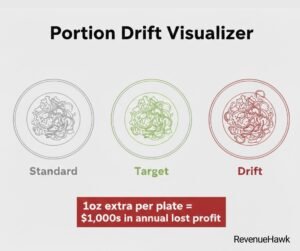
The fix is quite boring, but insanely profitable: implementing portion standardization systems.
Here’s what actually works in the real world — stuff we see successful operators doing every day:
- Pre-portion high-cost items in prep (proteins, cheese, premium toppings).
- Use the same scoops, ladles, pans, and containers across shifts.
- Build assembly kits for your top sellers during batch windows.
Then apply recipe engineering for margin. That doesn’t mean you just make it cheaper. It means:
- Design dishes that use overlapping ingredients (fewer SKUs).
- Shift cost into items that hold well in batch (sauces, bases, prepped veg).
- Keep the “wow” in the finishing step, not in a 12-step prep process.
If your signature dish needs 14 minutes of hands-on prep every time someone orders it, that dish isn’t helping you. It’s taxing your kitchen on every ticket.
How to Buy Smarter So Prep Stays Cheap?
Batch prep lives or dies on purchasing discipline. When ordering is sloppy, batch prep becomes a waste factory.
Use our supplier negotiation tactics guide with one goal: reduce volatility on your top cost drivers.
- Lock price windows where you can.
- Standardize pack sizes (your prep math depends on it).
- Cut special items that force one-off ordering.
And equipment matters when it turns labor minutes into consistency. Modern Restaurant Management makes the point clearly — prep equipment can reduce time and improve output consistency (which reduces waste).
How to Prevent Spikes and Keep the System From Slipping?
Reality is, even great operators get hit by randomness: vendor shorting, bad yield, new cook, sudden volume swings. That’s why you need a playbook for food-cost spike control:
- Put variance triggers on your top 10 items (example: chicken cost +8% or usage +6% week-over-week).
- When triggered, you don’t argue. You run a quick check: invoice, yield, portion, waste log, comp log.
- Fix in this order: (1) portion, (2) waste, (3) purchasing and (4) menu mix.
Batch prep gives you the structure to react fast — because your inputs are measured, not guessed.
CASE STUDY: A PUBLIC EXAMPLE (SWEETGREEN — NOT A REVENUEHAWK CLIENT)
Restaurant Type
Fast casual (salads/bowls)
Location
Costa Mesa, California (Sweetlane and Infinite Kitchen automated makeline)
Seats
32 (per company press release)
Problem Identified
Margin pressure and need for higher throughput with better labor efficiency (common driver behind their automation push)
What Was Implemented
Automated “Infinite Kitchen” makeline paired with a digital pickup lane (“Sweetlane”)
Results
Sweetgreen said its Infinite Kitchen restaurants are seeing ca. 700 bps labor savings and ca. 100 bps improvement in COGS vs restaurants of similar age and volume
This is a publicly reported example. RevenueHawk has no business relationship with Sweetgreen and did not verify these results beyond cited public sources.
KEY MISTAKES: WHAT TO AVOID
1. “Whenever we have time” prep is no system.
If prep only happens when the shift finds time, you’re guaranteeing constant emergencies, inconsistent execution, and staff burnout instead of predictable production.
2. Uncosted recipes make budgeting fiction.
When every recipe isn’t costed (with current prices), you can’t trust margins, set correct pricing, or spot where profits are quietly leaking.
3. Unlocked portions turn winners into profit leaks.
If portions aren’t standardized and enforced, your top-selling item can lose money fast because tiny over-portioning adds up to massive weekly cost.
4. Undisciplined purchasing creates a walk-in graveyard.
Without strict par levels, ordering routines, and accountability, you overbuy “just in case,” then watch food expire, get forgotten, or die in the back of the cooler.
5. Ignoring theft and shrink is donating your profit.
If you don’t run real loss-prevention discipline — counts, controls, and tight storage — batch prep can actually increase exposure by putting more product at risk before it hits a plate.
That last one needs to be said out loud: loss-prevention discipline is not optional. Batch prep often increases exposure if you’re producing more product ahead of time without tighter controls.
Also — you should stop defending low-margin items because a few people love it. That’s how you stay broke. You need menu loser removal.
METRICS: THE NUMBERS THAT MATTER
HTracking everything is the fastest way to learn nothing. Pick a few. Track these:
Food Cost % (Actual)
Food Cost % = COGS / Food Sales
Prime Cost % (context)
Prime Cost % = (COGS + Labor) / Sales
Ideal Food Cost
Ideal Food Cost % = (Theoretical recipe costs for items sold) / Sales
Variance %
Variance % = (Actual COGS − Ideal COGS) / Sales
Prep Waste %
Prep Waste % = (Discarded prep $) / Total prep $
Batch Accuracy
Batch Accuracy % = [1 – (ABS(Planned batch qty– Actual used qty) / Planned batch qty)] * 100
Labor Hours per Cover
Labor Hours per Cover = BOH hours / covers (or orders)
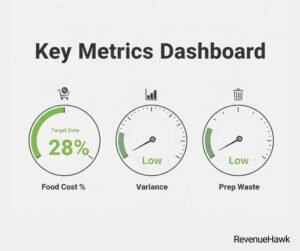
Pricing is where this becomes real money. If you want a target-based approach, learn how to price your menu for a 28% food cost — and then sanity-check it against market reality.
And don’t ignore drinks. Most operators under-manage the easiest margin in the building. Track beverage cost percentage weekly, not monthly.
For context on overall inflation trends, check BLS’ CPI review.
HOW TO MAKE IT LAST
Here’s how to build bath prep systems that actually last: use two layers — daily habits and a weekly audit.
Daily: high-profit inventory habits
- Date-label everything like your rent depends on it (because it does).
- First-in-first-out (FIFO) is a religion, not a suggestion.
- One person owns the walk-in order (not everyone grabbing stuff).
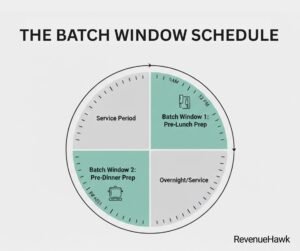
- Prep is produced in defined windows, not in between tickets.
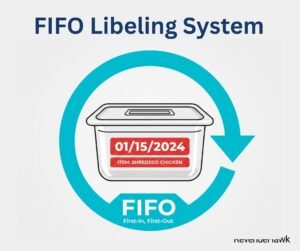
Weekly: the 15-point food-cost audit
Make the checklist short enough that it actually gets done:
- Top-item usage checks
- Waste log review
- Portion spot checks
- Vendor price check on top 10 SKUs
- Menu mix review (are guests buying what you want them to buy?)
THE RESET YOU NEED
Here are the few beliefs that change outcomes:
- More prep doesn’t equal more ready. Right-sized prep equals ready.
- Systems beat talent. Talent with systems is unstoppable.
- Complexity is not quality. Complexity is cost.
- The menu is a factory blueprint, not a poem.
And if you want to act like a factory owner (the profitable kind), learn menu engineering basics. Batch prep only works when the menu is designed to be batchable.
ACTION PLAN: WHAT TO DO NEXT
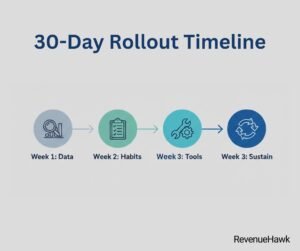
Ready to start? Run this over the next 30 days: (Week 1): lock your numbers, (Week 2): redesign your prep flow, (Week 3): reset pricing with confidence, and (Week 4): train, audit, and sustain.
How to lock the numbers without drowning in spreadsheets?
- Cost your top 20 selling items first. Don’t boil the ocean.
- Set your first batch sheets for those items only.
- Pick one weekly meeting time where you review: usage variance, waste, portion drift.
How to redesign prep flow so the kitchen stops thrashing?
- Create two batch windows per day (example: pre-lunch and pre-dinner).
- Build kits for your top sellers.
- Kill steps that don’t show up on the plate.
This Fast Casual article offers an operator-focused COGS piece that lands on the basics: inventory discipline, SKU control, and process choices drive cost outcomes.
How to raise prices without getting roasted in reviews?
Price is more than a number. It’s a story. It’s what guests feel: value, portion, speed, and consistency.
Use price-raise psychology like:
- Move price on items with strong differentiation (not commodities).
- Bundle value where guests feel it (not where it costs you).
- Improve consistency first — because inconsistency is what makes guests notice price.
Remember: don’t try to win on cheap — cheap is a trap. Reliable is a weapon. Win on reliable. Be the place that delivers every time.
How to train and sustain without becoming the bad guy?
- Train in the batch windows (not during rush).
- Do portion spot checks like a coach, not a cop.
- Post one scoreboard: waste, variance, and labor hours per cover.
Don’t ignore labor. Turnover is a profit leak. Black Box Intelligence flags that replacing managers can be a serious hit — over $17,500 to replace a GM in 2025, per their cited figure. Keep good people, and you keep your margin.
FREQUENTLY ASKED QUESTIONS (FAQ)
1) Will batch prep hurt freshness?
Only if you batch the wrong things. Batch bases, sauces, prepped veg, and proteins that hold well. Keep freshness in finishing steps.
2) What if sales are unpredictable?
That’s exactly why you batch with targets and adjust daily using variance and pars. Chaos doesn’t go away by ignoring it.
3) Do I need expensive software?
No. A consistent weekly count, a waste log, and batch sheets beat fancy used inconsistently.
4) My team resists changes. What works?
Make it easier for them to win. Kits, clear specs, the same tools every shift, and short training inside batch windows.
FINAL THOUGHTS
If your kitchen is chaotic and you think the answer is to squeeze labor, you’ve got it backwards — because all you’re doing is making chaos cheaper on paper and more expensive in real life. Batch prep isn’t prep; it’s control, and control creates consistency, consistency creates speed, speed creates labor leverage, labor leverage creates margin, and margin is what finally gives you breathing room. These are just a few of the plays inside our Restaurant Growth Engine, because in every restaurant we’ve seen, the headline problems — labor, food cost, waste — are almost never the root cause; they’re what happens when the system underneath is broken.