
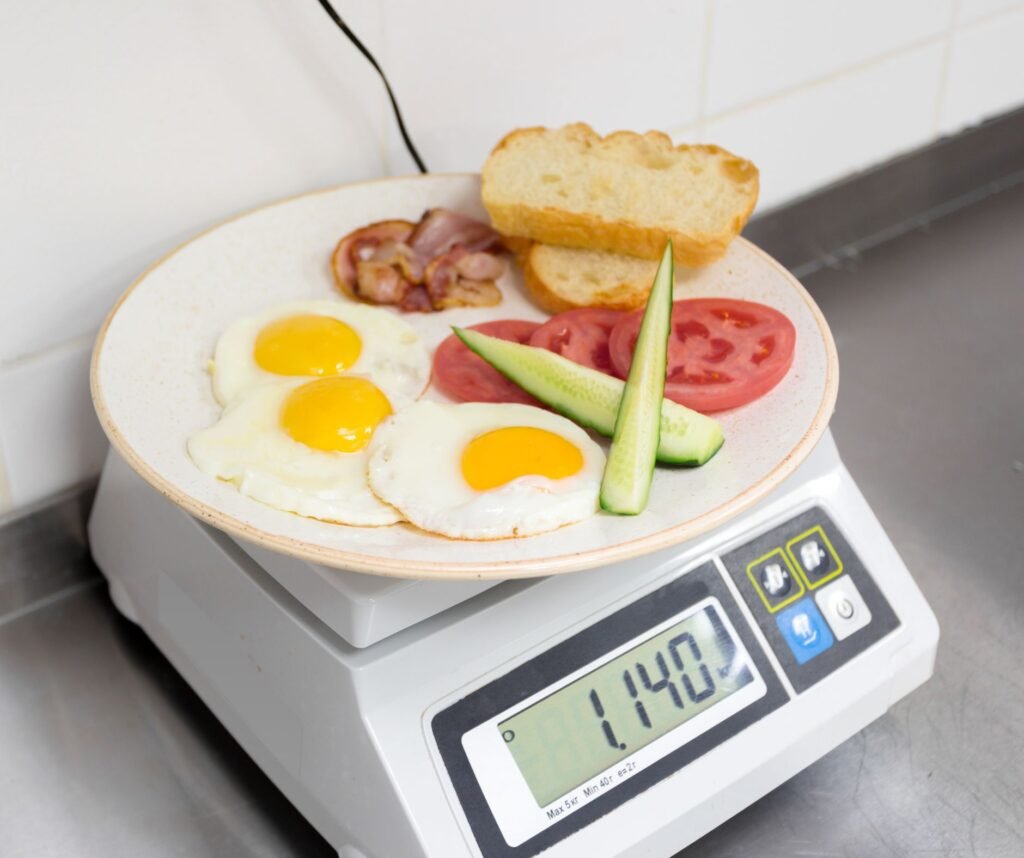
Let’s talk about accurate restaurant recipe costing and how it affects your profitability and overall success.
Why do two busy restaurants on the same street have totally different profit levels? We see it all the time at RevenueHawk. Two operators. Same city. Same cuisine. Similar sales. One pulls 18–20% net. The other is constantly “almost there” and living in overdraft.
The difference usually isn’t the chef, the brand, or even the traffic. It’s whether the owner has accurate, boring, non-sexy restaurant recipe costing that actually matches what happens on the line.
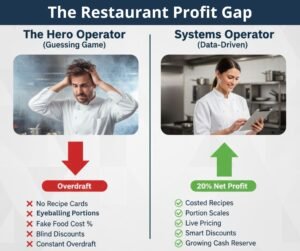
Look: when your recipe costs are wrong, everything is wrong and you’ll work hard just to break even:
- Your food cost % is fake
- Your menu pricing is a guess
- Your discounts are blind
- Your “profitable” dishes quietly bleed cash
According to the National Restaurant Association (NRA), wholesale food prices in late 2025 were still more than a third higher than pre-2020. When your ingredient costs are that volatile, guessing on recipe cost isn’t just sloppy — it’s dangerous.
The operators who win in this environment build reliable systems, not heroics. They use a food cost optimization playbook early, not when things calm down. They also lean into recipe engineering to design high-profit dishes, so the math and the guest experience pull in the same direction.
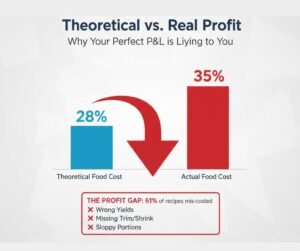
RevenueHawk Insight: In our work we’ve found that 61% of recipes were mis-costed by at least 10% because of wrong yields, missing trim loss, or sloppy portion assumptions. Fixing just the top 30 sellers lowered realized food cost by 3–6% without changing traffic.
This guide walks you through exactly how to build that level of accuracy — in plain language, without needing a finance degree.

KEY POINTS: WHAT YOU’LL LEARN
- Step-by-step to do accurate restaurant recipe costing: A practical 6-step system to cost recipes accurately, connect them to inventory, and keep them updated.
- Why this matters: Why restaurant recipe costing is the “master switch” behind menu pricing, labor efficiency, and real profit.
- Case study: A real-world composite example of a fast-casual restaurant that cut food cost by 5 points without cutting quality.
- Mistakes: The common traps that make restaurant recipe costing feel like a waste of time (and how to dodge them).
- Metrics: Simple formulas for food cost, beverage cost, prime cost, and contribution margin — explained like you’re 10.
- Make it last: How to turn one big costing push into daily and weekly habits that stick.
- The reset you need: The mindset shift that moves you from “we think” to “we know” on profitability.
- Action plan: A short, practical checklist you can start this week.
WHY THIS MATTERS
Food and labor costs are not going back to 2018.
The National Restaurant Association’s 2025 State of the Industry report shows operators still fighting high input costs and tight margins, even as sales recover.
At the same time, tech and real-time data are spreading fast — supply chain platforms, smarter inventory tools, and better menu analytics. The operators that use them well are pulling ahead.
But here’s the catch:
If your recipes are wrong, all that fancy data is still garbage.
- Your POS “theoretical food cost” is fake
- Your menu engineering report is lying
- Your “profitable” promotion might be a money shredder
From our own work, we see the same pattern over and over:
- Restaurants asking, “Why is my food cost so high?” actually need to start hunting down the hidden food-cost killers.
- They also need real menu engineering, not just pretty design, so their best sellers are also their best margin drivers.
Operators who get this right don’t just survive price swings — they turn them into a competitive advantage, because they can see profitability dish by dish while everyone else is still guessing.
STEP-BY-STEP HOW TO DO RESTAURANT RECIPE COSTING THE RIGHT WAY
Here’s our 6-step system we use with clients to nail restaurant recipe costing.
Step 1: Set Your Rules (Targets First, Math Second)
Before you touch a spreadsheet, decide what “good” looks like:
- Target food cost % by category (e.g., 26–30% for food, 20–24% for beverage)
- Minimum contribution margin per dish (e.g., “No entrée below $8 margin”)
- Your prime cost target (usually 60–65% for a healthy restaurant, per many industry playbooks)
This is your “guardrail.” Restaurant recipe costing without clear targets just gives you numbers to argue about.
Step 2: Build One Simple Recipe Template
Now you need to create a simple recipe template. Use one standard template for every recipe:
- Dish name & PLU
- Portion size (in grams/ounces, not “one scoop”)
- Ingredient, unit, and unit cost
- Yield % (after trim, cooking loss, etc.)
- Cost per portion
- Selling price
- Food cost % and contribution margin
This is also where you plan a tight weekly food cost audit, so you’re not re-inventing the wheel every time you review recipes.
Step 3: Cost Your Top 20–30 Sellers First
Don’t try to cost your entire menu in one night. That’s how this dies. Take measured steps instead, based on prioritization.
Start with:
- Top 20–30 items by sales
- Any item you discount or promo often
- Any dish with a lot of prep or expensive proteins
Here’s what usually breaks the math:
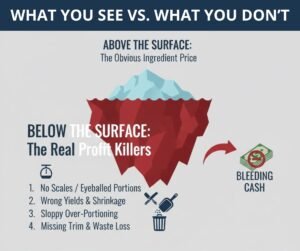
- Using case weight instead of usable weight
- Ignoring trim, bones, shells, or cooking shrink
- Letting “two handfuls” count as a portion
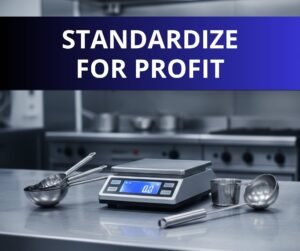
This is where you lock in systems to stop over-portioning. That means:
- Portion scoops or ladles for sides
- Scales for proteins (yes, actually used)
- Clear photos or diagrams on the line
RevenueHawk Insight: When we force scales onto the line for just 10 high-volume items, operators typically see a 2–3 point improvement in realized food cost within 30 days — without changing menu price or traffic.
Step 4: Connect Recipes to Real Prices and Inventory
Accurate restaurant recipe costing lives or dies on accurate ingredient prices. When that much money is in play, you can’t afford stale prices.
Focus on:
- Keeping vendor price lists updated weekly (at least for A-items)
- Mapping each ingredient in your recipe to an actual inventory SKU
- Using consistent units (no more “lb” in inventory and “oz” in recipes without conversion)
This is where you also build simple ways to track weekly food cost. Even a spreadsheet and closing inventory snapshot is better than nothing.
And yes, you can use supplier negotiation tactics to lower unit costs. National Restaurant Association notes that new supply chain tech gives operators real-time data to negotiate better and reduce waste.
Step 5: Lock In Prep and Batch Systems
A huge chunk of cost leaks out during prep, not just on the pass.
That’s why we standardize:
- Batch yields (e.g., one soup batch equals X portions at Y oz each)
- Trim usage (what happens to carrot tops, steak trim, etc.)
- Day dots and shelf life
- Who signs off on batch logs
Done right, this turns into batch prep systems that cut both labor and food waste.
We’ve seen kitchens cut prep labor by 10–15% once batch sizes were dialed in and matched to actual sales patterns — and food waste dropped at the same time.
Step 6: Review Weekly and Kill Spikes Fast
Keep in mind: restaurant recipe costing isn’t a ‘set it and forget it’ project. It’s a weekly habit.
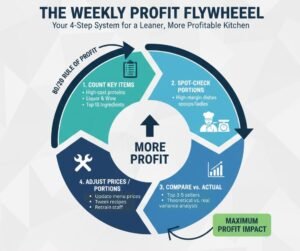
Here is your weekly checklist: :
- Compare theoretical vs actual food cost
- Investigate big gaps (by category and by item)
- Check for price changes on top ingredients
- Decide on menu tweaks or portion changes
You want to know how to fix sudden food-cost spikes and how to prevent them. When chicken jumps 15% overnight, you should know within days, not months.
To keep the numbers trustworthy, we also track:
- Variance between counted inventory and theoretical usage
- Any unexplained gaps that might point to waste or theft
Tie this into your loss control plan and your costing system becomes a profit radar, not a static document.
CASE STUDY: A REAL EXAMPLE
Restaurant Type
Fast-casual taco concept
Location
Suburban market, U.S.
Seats
80
Problem Identified
POS showed “target” food cost at 28%. Actual landed closer to 35–36% for months. Owner blamed “prices and portion control,” but had no real recipe costing or variance tracking.
What Was Implemented
- Built a simple recipe template and costed the top 30 sellers
- Updated all major ingredient prices and locked them to SKUs
- Introduced scales on the line for proteins and tortillas
- Standardized batch prep for rice, beans, and salsas
- Compared theoretical vs actual weekly, by major category
One big unlock: a few “guest favorite” combo plates had almost no margin once they were costed properly. Used the data to build a ruthless ‘kill the losers’ filter for low-margin menu items and either:
- Raised price
- Shrunk portion slightly
- Or removed them from the menu
At the same time, we pushed high-margin tacos and add-ons harder using basic menu engineering techniques.
Results (First 90 Days)
- Realized food cost dropped from 35–36% to 29–30%
- Weekly food waste (by value) dropped 20%
- Guest satisfaction scores stayed flat or improved (no brand damage)
- Net profit improved by roughly 4–5 points, with no extra traffic
Once the system was in place, the owner finally trusted the numbers enough to make sharper moves on pricing and promotion.
KEY MISTAKES: WHAT TO AVOID
Here are the mistakes we’ve seen again and again that keep recipe costing from working:
1. Trying to grow before fixing margins
Pushing more traffic through a broken costing system just scales your problems. Fix margin first, then pour on volume.
2. Treating restaurant recipe costing as a one-time project
Prices move weekly. If you don’t revisit recipes, you’re flying blind.
3. Letting staff eyeball portions because they’re pros
“He’s been here 10 years” is not a portion control strategy.
4. Keeping low-margin dishes because customers like them
If they like them and you lose money on every plate, that’s not loyalty — that’s slow suicide.
5. Ignoring loss and shrink
This is where you need a basic loss-prevention shield against waste, theft, and shrink. If your counts never quite match your usage, that’s not normal, it’s money walking out the door.
6. Doing inventory “when we have time”
Inconsistent counts are one of the biggest inventory mistakes. If counts aren’t consistent, your food cost isn’t trustworthy.
7. Assuming more customers equals more profit
If every extra guest adds more cost than margin, being busier just makes you more tired, not more rich.
METRICS: THE NUMBERS THAT MATTER
Let’s keep this simple. These are the numbers that actually matter for recipe costing.
1. Recipe Cost per Portion
For each dish:
Recipe Cost per Portion = (Total cost of all ingredients used for one serving)
Example: If a burger uses $2.20 in ingredients, that’s your cost per portion.
2. Food Cost Percentage
Food Cost % = Recipe Cost per Portion / Selling Price
Sell that burger for $9.00:
- Food Cost % = 2.20 / 9.00 ≈ 24.4%
This is where you can design a simple pricing formula aimed at a 28% food cost (Restaurant Pricing Formula: How to Price Your Menu for a 28% Food Cost). You work backwards from your desired food cost % to your selling price.
Industry content often suggests prime cost (food + labor) in the 60–65% range for healthy full-service operations. Recipe costing is how you lock in the food side of that.
3. Beverage Cost Percentage
For each drink:
Beverage Cost % = Beverage Cost per Pour / Selling Price
Example: If your house wine pour costs you $1.20 and you sell it for $6:
- Beverage Cost % = 1.20 / 6.00 = 20%
That’s the basis for clear beverage-cost percentage math (How to Calculate Beverage Cost Percentage (The Key to High Margins)) and is often where margins are easiest to win.
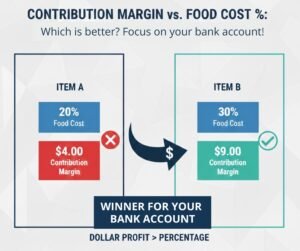
4. Contribution Margin
This is the money that’s left to pay rent, labor, and profit after ingredients.
Contribution Margin per Dish = Selling Price – Recipe Cost per Portion
Example: $9 burger – $2.20 cost = $6.80 margin
Contribution margin is more important than food cost % when you’re deciding what to promote. A slightly higher food cost on a much higher-margin item can still be a win.
5. Prime Cost Percentage
Prime Cost % = (Total COGS + Total Labor) / Total Sales
This is the big one. Many profitable restaurants aim for 60–65% prime cost. If yours is 70–75%, recipe costing is one of the fastest ways to move it.
6. Covers per Labor Hour
Covers per Labor Hour = Total Covers / Total Labor Hours
Recipe costing matters here because:
- Simpler, well-costed dishes = faster execution
- Faster execution = more covers per labor hour
- More covers at strong margins = better profit
HOW TO MAKE IT LAST
Monthly costing days don’t fix food cost — they delay it. Weekly habits do. Keep it small, keep it steady, keep it accurate.
Think in three levels:
Daily Habits
This is where you build daily inventory habits you actually stick to (Restaurant Inventory Management: 5 Daily Habits of High-Profit Kitchens):
- Count key high-cost items (proteins, cheese, liquor)
- Spot-check portions on 2–3 high-volume dishes
- Log any waste, comps, or re-fires
Weekly Habits
- Run your theoretical vs actual food cost report
- Update prices on top-moving ingredients
- Review any new menu items added that week
- Refresh recipes that changed on the fly
This is also when you look at raising menu prices without chasing guests away. Small, smart price moves on accurately costed dishes are safer than big, panicked increases later.
Monthly Habits
- Review top 20 dishes by profit, not just by sales
- Re-engineer underperforming dishes using margin data
- Audit a sample of recipe cards against real line behavior
THE RESET YOU NEED
Here’s the mindset shift we see in the winners — again and again:
- You don’t win by yelling at cooks about portions — you win by making the right portion obvious and easy.
- And you don’t win by working harder — you win by removing chaos from your recipes and prep.
- Systems beat talent. Numbers beat guessing. Consistency beats effort.
When recipes are accurately costed and actually followed, your restaurant stops being a mystery and starts behaving like a machine you can tune.
ACTION PLAN: WHAT TO DO NEXT
If you do nothing else, do this in the next 14 days:
- Pick 20–30 dishes that drive most of your sales.
- Build one simple recipe costing template in Excel, Google Sheets, or your existing software.
- Cost those dishes properly — with real yields, not guesses.
- Check margins against your targets. Fix or flag the worst offenders.
- Introduce one portion control tool (scale, scoop, or ladle) on the line.
- Set up a weekly 30-minute costing review with your chef or kitchen lead.
As you go, use recipe-engineering techniques to design high-profit dishes for new menu items. That’s how you turn recipe costing from “one more project” into the backbone of your profit engine.
FREQUENTLY ASKED QUESTIONS (FAQ)
Q1: Do I need expensive software to do this right?
No. Software helps, but it’s not the starting point. Start with a simple spreadsheet to track weekly food cost. Once your process is solid, software just speeds it up.
Q2: How often should I re-cost my recipes?
At least quarterly for everything, and monthly for your top sellers and high-cost proteins. Any big vendor price change should trigger an update.
Q3: What if my staff won’t use scales or portion tools?
Make it part of the system, not an optional “extra.” Tie it to training, coaching, and line checks. Show them the numbers so they understand it’s about keeping the business — and their jobs — healthy.
Q4: Where do beverage costs fit into all this?
Beverage is often your best margin category. Dialing in clear beverage-cost percentage math and pairing it with food is one of the fastest ways to grow profit without adding seats or hours.
FINAL THOUGHTS
Accurate restaurant recipe costing is not “nice to have.” It’s the control panel for your entire restaurant: menu pricing, promotion, inventory, labor planning and profit.
At RevenueHawk, we see the same pattern over and over: once operators get their recipe costing clean and connected to real behavior in the kitchen, everything else gets easier. Decisions get faster. Fights about “feelings” go away. The business finally runs on facts.
And honestly? The plays in this article are just a small part of our overall Restaurant Growth Engine system. That system saves time and money by treating your restaurant like one connected machine — recipes, menu, inventory, labor, and pricing all tuned around profit, not guesses.
But you don’t need the whole system to start winning. Start with recipe costing. Get it accurate. Make it a habit.
Once you do that, every other improvement you make will actually stick — and your restaurant will finally start paying you like the owner, not the last person to get paid.